

Choose soft pastels for a powdery, matte surface and softly blended transitions. Choose oil pastels for a waxy drawing feel, distinct strokes, and built-up texture. Both can produce strong color and gentle gradients. The difference becomes clearer when you look at how the color moves across the paper and how the finished surface needs to be handled.
One name causes a lot of confusion: “soft oil pastels” are still oil pastels. The soft pastels discussed here are dry, powder-based sticks, not extra-soft oil pastels or pastel pencils.
Oil pastels vs. soft pastels at a glance
| What changes | Oil pastels | Soft pastels |
|---|---|---|
| Material | Pigment with oil and wax | Pigment with a small amount of binder |
| Surface and marks | Waxy color that can retain strokes and raised texture | Dry, powdery color with a matte appearance |
| Blending | Work neighboring colors together, or leave strokes visible | Spread dry color to soften edges and broad transitions |
| Cleanup | Oily or waxy residue; Kuelox washes off hands with water and soap | Loose powder to clear from the work area |
| Finished work | Protect from rubbing, pressure, and heat; use a suitable oil pastel fixative for long-term Kuelox artwork | Protect the surface from rubbing during storage and framing |
What are oil pastels and soft pastels made of?
Soft pastels contain pigment held together with a small amount of binder. As you draw, they leave dry particles on the surface. You can spread that color with a blending tool to soften an edge or bring neighboring shades together.
Oil pastels combine pigment with oil and wax. The stick leaves a layer that you can move, overlap, or scrape back. With a soft formulation, you can also build raised marks that remain visible in the finished work.
That difference affects the rhythm of drawing. With soft pastels, you might lay down a patch of color and soften it across a wider area. With oil pastels, you can leave individual strokes in place, blend a small boundary, then add another mark over the top.
How the two materials look in finished drawings
In the sunset made with Kuelox Beginner Grade oil pastels, the clouds contain visible strokes of pale blue, pink, and cream. The water below carries broader overlapping marks. Parts of the color stand above the paper, giving the landscape a textured surface.

This is worth seeing in a beginner set. You do not have to choose our softest formula to explore layering and thick marks. Extra Soft is the softer option when cutting, reshaping, or picking up color with a palette knife is a priority.
The soft pastel drawing takes a different approach. Blue fades into a warm peach and yellow sky, while the paper grain remains visible through the color. The broad transitions draw attention to the glow around the moon.
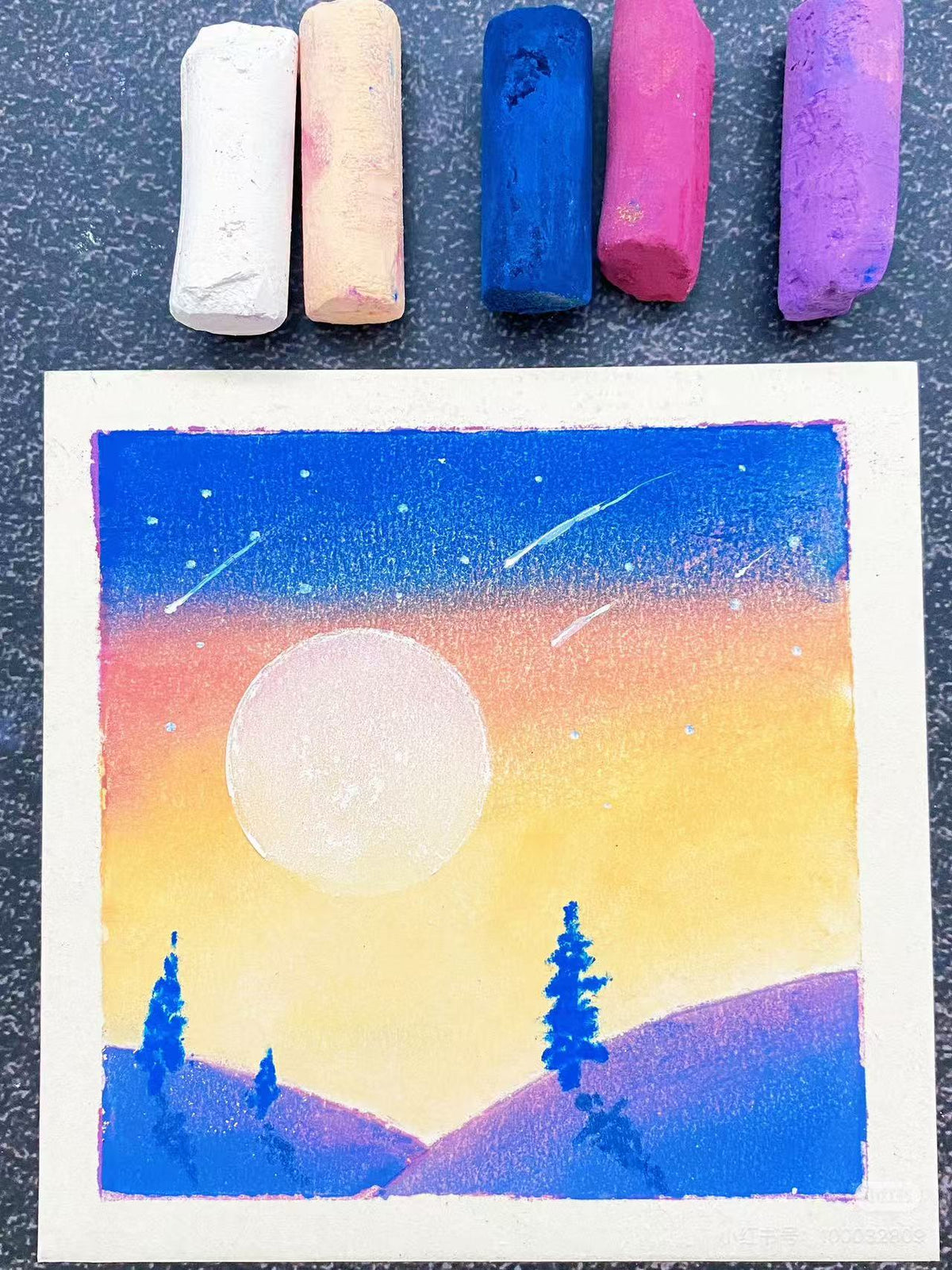
These are two examples of what artists can do with the materials. They were made with different subjects and techniques, so they are not a controlled comparison of coverage or color strength.
Blending and layering with oil pastels and soft pastels
Soft pastels are a good choice when you want a broad, softly blended passage, such as a hazy sky. You can also leave sharp strokes unblended. Blending everything can flatten the drawing, so keep some edges and marks intact where the subject needs them.
Oil pastels suit visible strokes, scraping, and raised texture, but they also blend into smooth transitions. Start with light layers and work the meeting point between colors. You can keep the rest of the marks separate if you like their shape.
Coverage is a separate question. Powdery color can still cover an earlier layer; a pale oil pastel does not automatically hide every dark mark beneath it. The pigment, paper, and amount of material already on the surface all affect the result. Try the exact colors together before committing to a highlight.
Dust and cleanup
Soft pastel work produces loose powder. Keep the working area clean and avoid brushing your hand across passages you want to preserve.
Oil pastels leave an oily or waxy residue rather than the same loose dry powder. Keep a spare sheet beneath your resting hand to reduce accidental smearing.
Kuelox oil pastels are easy to wash off hands with water and hand soap or dishwashing liquid. That is different from dissolving the pastel for a painting technique: Chinese Traditional Color is our water-soluble series. Easy hand cleaning does not mean every series dissolves in water, or that marks will wash out of every fabric.
Protecting oil pastel and soft pastel artwork
Soft pastel color is easily disturbed by rubbing. Protect the surface during storage and framing. If you choose to use a fixative, check its suitability for soft pastels and test the effect on a separate sample first.
Oil pastels generally remain workable instead of curing into a hard paint film. For Kuelox oil pastel artwork you intend to keep long term, use an oil-pastel-specific fixative as part of the finishing process. Follow the product instructions and test it on a sample before treating the finished drawing.
Continue to protect the work from pressure, rubbing, and heat after fixing it. A protective spray does not make a drawing scratch-proof. Interleaving sheets help separate sketchbook pages, but avoid closing a book tightly against raised areas of color.
Oil pastels or soft pastels: which should you choose?
If you want to work with dry color, soften broad passages, and keep a matte, powdery finish, start with soft pastels. Allow time for clearing loose powder and protecting the finished surface.
If you want to build textured marks, scrape through layers, or retain the shape of each stroke, start with oil pastels. The sunset above shows one way to explore those effects with Kuelox Beginner Grade.
For a first Kuelox set, Beginner Grade offers a lower-priced option with blending and layering results broadly similar to Extra Soft. Choose Extra Soft when the softer handling and ease of shaping matter more to your work. Our oil pastel buying guide compares the series, palettes, and set sizes.
Are soft oil pastels the same as soft pastels?
No. Soft oil pastels belong to the oil-and-wax family. The word “soft” describes how the stick handles. Soft pastels are the dry, powder-based material discussed in this comparison. If you are choosing between softer and firmer oil pastels, read our soft vs. hard oil pastels guide.